
Review: Even These Things at The Royal Exchange Theatre
An epic story of Manchester, past and present. Even if you're not that into theatre, go and see this play, writes Maria Roberts
Published 2 June, 2026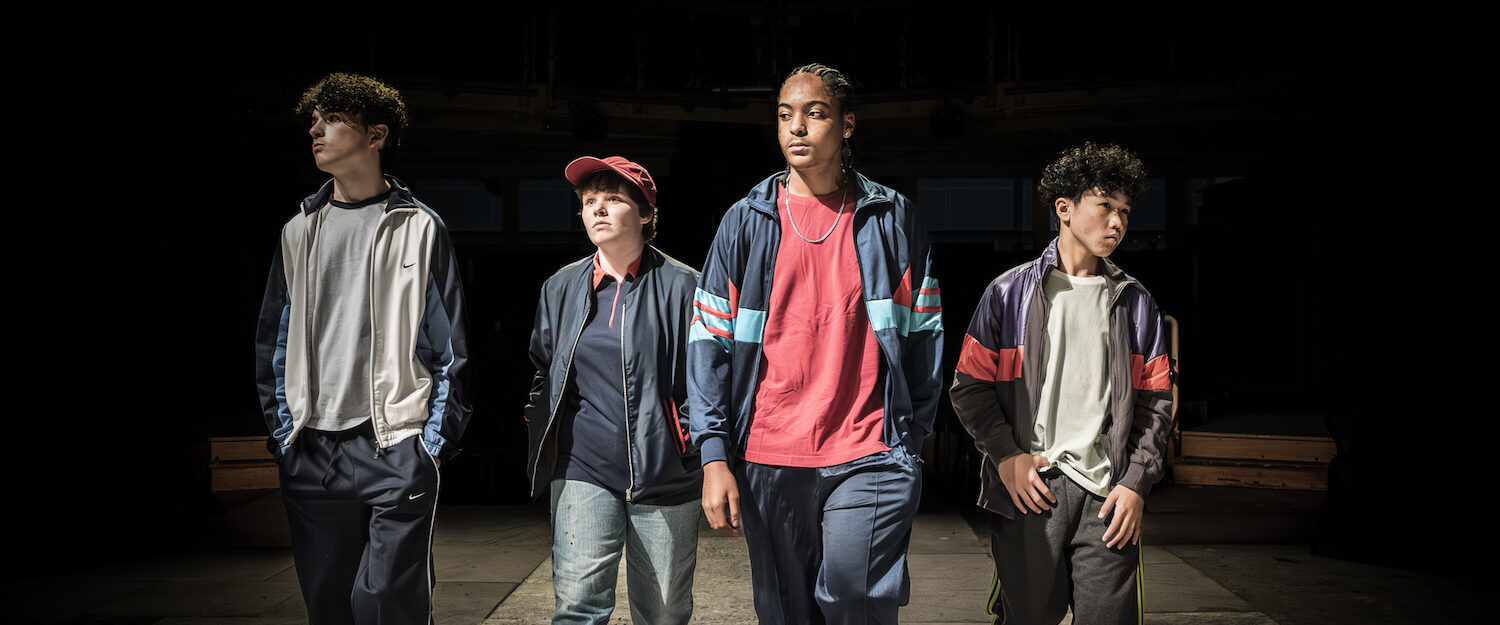
Rory Mullarkey has long had a relationship with the Royal Exchange. In 2013, aged 25, he was the youngest playwright to have his work staged in the main auditorium. His wunderkind debut, Cannibals, was a savage tale of distress and adversity that left you feeling equally revulsed and in awe of the brutality on stage. There are hues of that savagery in his latest work.
Commissioned by the Royal Exchange for its 50th Anniversary Homecoming series, Even These Things (directed by James Macdonald) is an epic story of Manchester over three centuries. In 1846, Annie Donovan has a score to settle; in 1996, an IRA bomb explodes on a Saturday morning; and in 2026, Jenny leaves London to move back to the city she once called home.
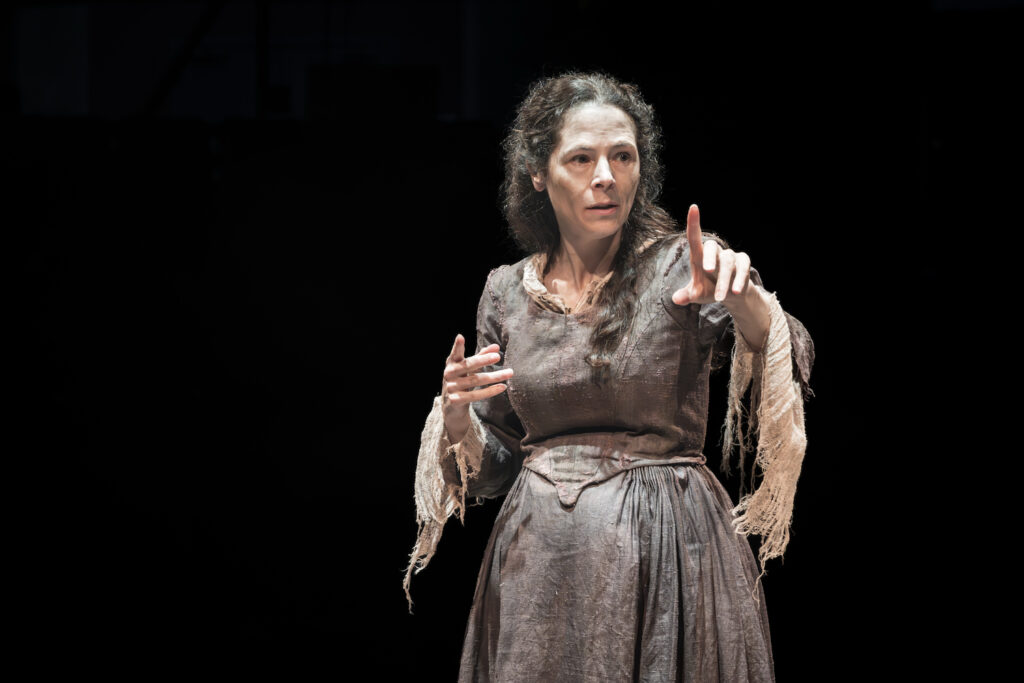
The play opens with Elaine Cassidy’s enraged Annie Donovan; seven months pregnant to a man from Huddersfield, whose incredible thighs offset his poor constitution for responsibility. Annie came to Manchester for a new life but sells matches by day and sleeps on a cellar floor, nestled up to her pig’s warm skin. Life is tolerable, until her pig is murdered by Lizzie Crosby. Now ‘Pig Annie’ is out to kill Lizzie.
A phenomenal performance
Cassidy as Annie is phenomenal. She holds the stage solo, enchanting the audience during her long and dervish rant about her dead pig, poverty, hunger, and the Irish experience. She has the odd exchange with her German mate ‘Fred’, down the pub, who is documenting the plight of the working classes. Cut between her tirades and jokes, a visceral pain strikes hard at the rawness of her desperate situation. You hurt for her and you laugh with her because, not only is Annie’s life shit, but she is also covered in it! Mullarkey is at his best when he digs deep into this darkness.
After a devastating end of Part 1 (no intervals by the way, so hold your pees), the play shifts merrily to the morning the IRA bomb went off in Manchester. With the help of a voluble Manc narrator (Katherine Pearce, followed by Cassidy) and a bubbly cast of volunteers, we move from 19th century Angel Meadow to Manchester mid-1990s.
Part 2 places Manchester at the precipice of magnificence: its myriad characters are smack bang in the Britpop era. The volunteer cast, Laura Hopkins’s design, and Macdonald’s direction capture this eccentricity exceptionally.
It is 30 years since that day and I know exactly where I was when the bomb went off: loading James’ ‘Laid’ into my cheap plastic Hi-Fi, gazing out of my bedroom window thinking: what the hell was that? I was reminded of that moment in the theatre: how my teenage optimism was then shaped by fear. In truth, I almost cried.
A red pillar box at 11.17am
As the clock ticks towards 11.17am, kids in bucket hats sing ‘She’s Electric’, urban teenagers want to rob oblivious posh boys from Altrincham (identifiable by their chinos), and retail managers proudly open up shop for the day.
This cacophony of Manchester people is captured with deep affection and humour (Mullarkey is a Manchester lad himself). The narration builds momentum, and there are memorable details to melt your Manc heart. (*Except for the gag about gorgonzola at Kwik Save. I swear down that it is highly unlikely gorgonzola was sold at Kwik Save in 1996. Edam yes. Laughing Cow, possibly. Gorgonzola is surely a Sainsbury’s thing?)
The atmosphere is light and breezy, until the red pillar box is brought onstage and the bomb goes off. It’s a dramatic device used to excellent effect. I was scared. I jumped… and was taken back to the fear and sadness of the IRA bomb in Manchester on June 15, 1996. No one was killed. Two hundred were injured. The city was rebuilt. But it was devastating. Mullarkey handles this well.
Angel Meadow in 2026
It is 30 years since that day and I know exactly where I was when the bomb went off: loading James’ Laid into my cheap plastic Hi-Fi, gazing out of my bedroom window thinking: what the hell was that? I was reminded of that moment in the theatre: how my teenage optimism was then shaped by fear. In truth, I almost cried.
When the play jumps forward to 2026, we return to Angel Meadow. The area is now a landscaped, sterile park. Beside the fancy new-build tower blocks, 40,000 of Manchester’s poorest are buried.
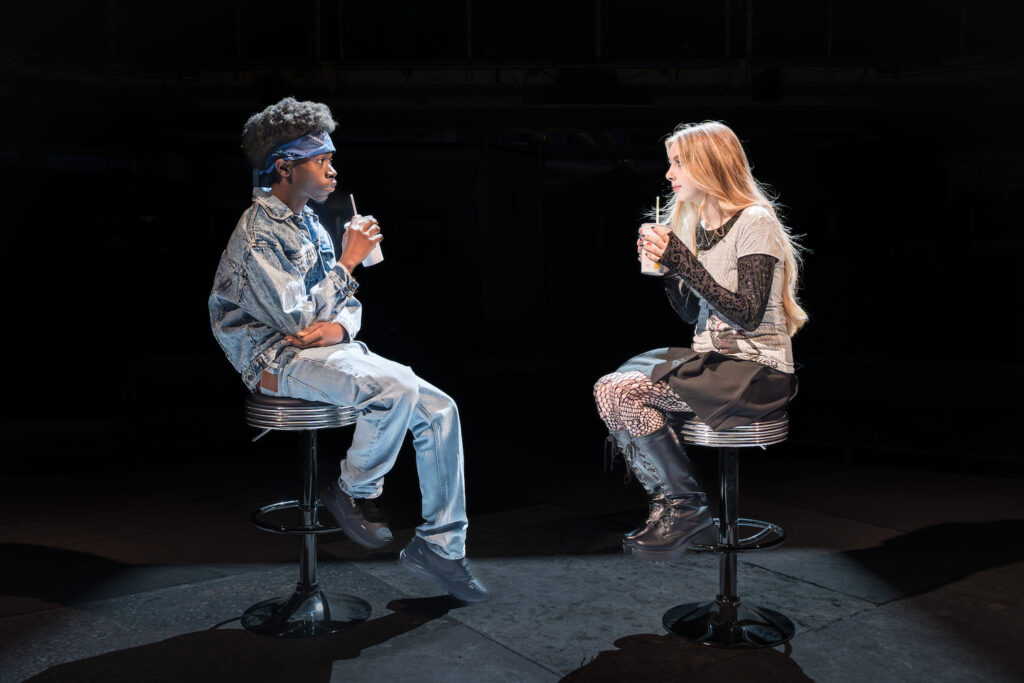
Facing one another on two park benches, an awkward and shy Jenny strikes up a conversation with Irish Kaz, who is at the park with her daughter, Annie. Jenny has lost a baby. Kaz has a child and no partner. Kaz is real Irish. Jenny has an Irish surname. From here, the themes, the metaphors, the purpose…it all gets a bit vague.
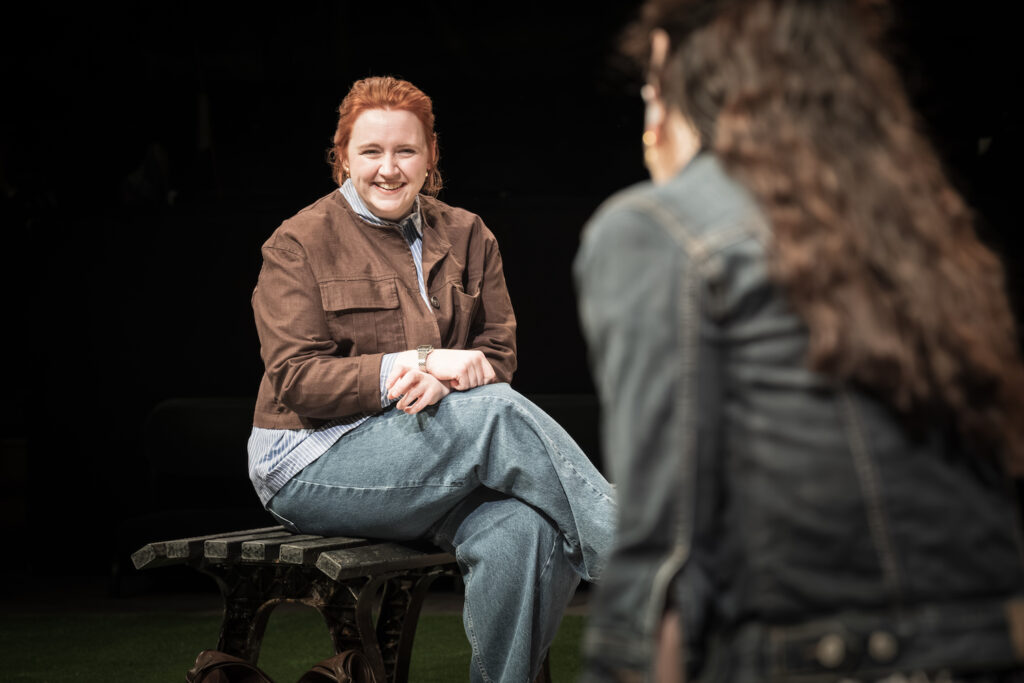
Motherhood, motherlands and hope
The third section struggles to land as it tries to navigate a through line of motherhood, motherlands, and hope; the intention is there to see, but it doesn’t quite slide into place. This might be because the play misses an opportunity to push hard to land itself firmly in the context of contemporary Manchester. Manchester in 2026 is as complex as Manchester in 1846 and 1996. There was little hint of how the Irish immigrant heritage has been popularised/diluted in the bars, whilst other immigrants are now hounded. Having said that, the audience went with the story.
1846 Annie references that Manchester was built by the starving Irish who’d been driven from their own world to help rebuild another. There are clear parallels here with present-day Manchester: it remains a complex city of culture, innovation, immigration, activism and poverty. The city today grips onto its identity whilst battling expansion, investment and a tidal wave of new voices that don’t ‘sound Mancunian’.
Manchester remains a place where the marginalised can find themselves stuck. And racial discrimination still exists: you can be a Mancunian of Irish heritage in 2026 and still have the word ‘potatoes’ yelled at you. (We’re of Irish heritage ourselves. It happens.)
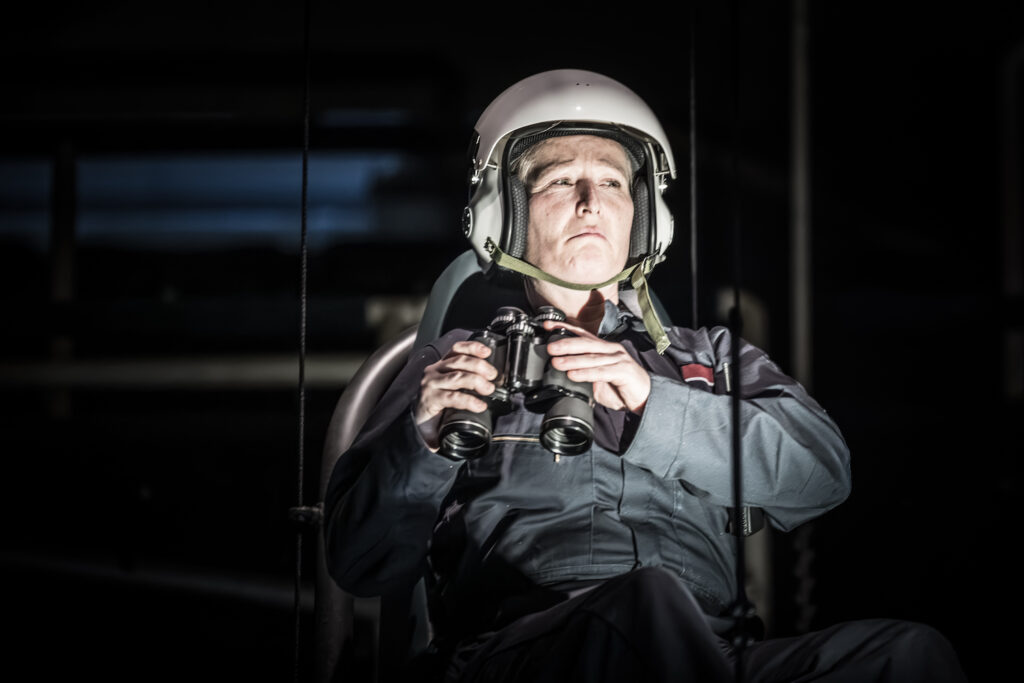
Like a bag of chips on a cold, wet day
There was an opportunity here for Mullarkey to go hard in part three, yet the play purrs softly towards mumblecore in a bid to create something meaningful out of all the noise and laughter that came before.
When Mullarkey packs a punch, Even These Things is unforgettable. And his warmth and humour bring on the warm fuzzies like a bag of chips on a cold, wet day. Annie Donovan is a cracking character (a nod to ‘Annie’ Horniman of the Manchester School of Playwrights?), she will stay with you long after you leave.
Even These Things is on until the 15 June, even if theatre isn’t your thing, I’d recommend going. All in all, it is an enjoyable performance and thoughtful tapestry of Manchester through the ages.
Even These Things is at The Royal Exchange Theatre, Manchester until 15 June. Tickets from £12.
Get the latest news to your inbox
Get the latest food & drink news and exclusive offers by email by signing up to our mailing list. This is one of the ways that Confidentials remains free to our readers and by signing up you help support our high quality, impartial and knowledgable writers. Thank you!
SubscribeJoin our WhatsApp group
You can also get regular updates on news, exclusives and offers by joining the Manchester Confidential WhatsApp group.


Summary
A Penguin published author, writer and creator, Maria Roberts was born and raised in Manchester. She is an arts writer and editor, covering theatre, festivals, music, dance and everything cultural in between. She has a sneaky interest in weird / tech / hybrid arts. Maria has a wild side and loves Latin dance beats, hip-hop, EDM, and wouldn’t say no to a night at Creamfields or WHP.
Experience
After time at City Life as the Kids and Out & About editor, Maria spent a decade as editor-in-chief of an international arts magazine, watching shows in development and onstage in the UK, Europe, Asia, and North America. She’s sat through a concert played on kitchen utensils in Berlin, held her concentration through hours of naked contemporary dance shows in Reykjavík and Jerusalem, chatted over tea with Lang Lang in San Francisco, interviewed Andrew Garfield in Leeds, and flew to China and back in 48 hours to eat intestines with a minister of culture. From 100-cellists at Walt Disney Concert Hall in LA, to wood-whittling in Taipei, and festivals in Malta, she has enjoyed (endured) a multitude of artforms.
Areas of Expertise and Interest
- International, national and regional works
- Theatre / musicals
- Festivals
- Dance (traditional, contemporary, weird), circus, puppetry
- Music including Classical, neoclassical, ambient, opera
- Tech and cultural mashups
- Museums / galleries / visitor experiences
- Cultural experiences at home and abroad
- Literature / spoken word
Review Approach
Maria believes that culture is for everyone, not just the few, and that we should all try something new. She reviews the arts on the quality of the work, the purpose, the context, and audience engagement.